For a home cook, dry-versus-canned is a pantry question. For a foodservice distributor or export buyer sourcing by the pallet, it’s a cost, freight, and formulation decision — and the math looks different at volume than it does in a single kitchen.
⚡ Executive Summary: What Bulk Buyers Actually Save on Dry Beans
Here’s what the comparison actually shows once you price it by the pound instead of by the can:
- The Cost Gap: Dry beans run roughly half the cost per usable pound of canned — no water weight, no can, no canning line built into the price.
- The Freight Math: A pound of dry beans yields about 4-5 standard cans’ worth of cooked product, without shipping any of the water or metal that comes with those cans.
- The Sodium Control: Dry beans start at zero added sodium, which matters for private-label formulation and menu items marketed as lower-sodium — canned requires draining and rinsing to cut sodium by up to 41%, and still starts from a higher baseline.
- The Inventory Case: Properly stored dry beans hold quality for 12+ months, letting distributors buy ahead on price without the shelf-life pressure of a perishable.
- Where Canned Still Wins: Zero prep time. For a quick-service concept without kettle capacity or a menu item needing beans in minutes, canned remains the right call.
Cost Per Usable Pound, Not Cost Per Can
A per-can price hides the number that matters: cost per pound of beans a customer actually eats. Canned beans carry water and steel through the whole supply chain — a buyer pays freight, storage, and handling on packaging that never reaches a plate. Dry beans strip that out; one pound yields roughly 4-5 standard cans’ worth of cooked product, and the buyer pays only for the bean. That gap compounds at volume: a distributor moving pallets is moving the cost difference across every truckload, and an export buyer paying by the container feels the same density advantage in landed cost.
Properly stored dry beans also hold quality for 12 months or more, letting a buyer take a larger position when pricing is favorable instead of ordering hand-to-mouth against a shorter shelf clock.
Sodium and Formulation Control
For private-label products or menu items marketed on sodium content, the starting point matters. Dry beans begin at zero added sodium — a formulator builds salt in deliberately, to spec, rather than working backward from what the can already contains.
Canned beans can close part of that gap: research from the Tufts University Nutrition Letter found that draining alone cuts sodium by about 36%, and draining plus rinsing cuts it by around 41%. That’s a real reduction, but it starts from a higher baseline and loses some water-soluble nutrients — like folate and other B vitamins — along with the salt. For a buyer building a sodium claim into packaging or a menu description, starting from zero is a cleaner spec than starting from a reduction.
Where Canned Still Wins for a Kitchen
Dry beans require a soak-and-cook cycle — typically an 8-24 hour soak followed by one to two hours of simmer time. That’s a real operational cost: kettle time, labor, and a prep schedule built around it. A high-volume quick-service kitchen without that kettle capacity, or a menu item that needs beans ready in minutes, is better served by canned. The trade-off is speed for cost and control — and for some operations, speed wins.
Sourcing Consistency Matters More Than the Comparison
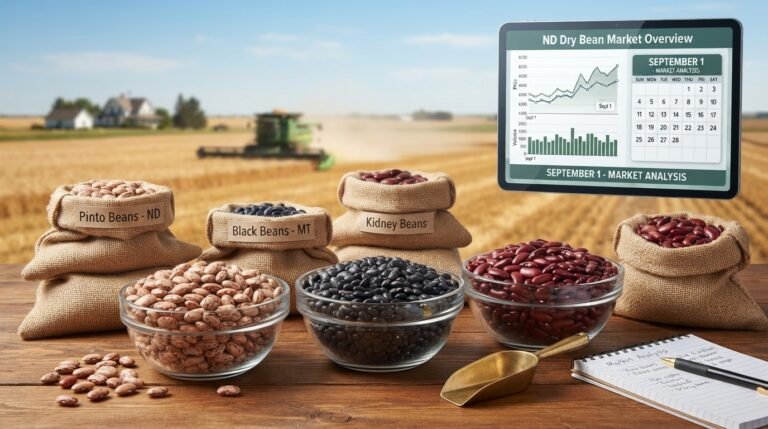
The dry-versus-canned math only holds if the dry beans cook consistently. Older stock from a slow-turning shelf takes longer to soften and cooks unevenly, which erodes the labor-cost advantage this whole comparison is built on. Fresh-crop, USDA-graded dry beans — black, pinto, navy, and small red — cook in a predictable window, which is what a standardized recipe and a consistent plate cost actually depend on.
Frequently Asked Questions
How much do bulk dry beans save over canned?
Roughly half the cost per usable pound, since the buyer isn’t paying freight and packaging on water and steel that never reach the plate. The exact spread depends on bean type, volume, and current market pricing.
What’s the yield difference between dry and canned?
One pound of dry beans yields roughly 4-5 standard cans’ worth of cooked product — a reason per-can pricing misleads on volume purchases.
How long do dry beans store compared to canned?
Properly stored, 12 months or more. Canned keeps longer unopened, but that edge matters less when a distributor turns inventory regularly.
Do dry beans really run lower sodium?
Dry beans start at zero added sodium — you control it entirely. Canned beans carry sodium from packing, which draining and rinsing can cut by up to 41%, but not eliminate.
Sourcing Bulk Dry Beans for Your Operation?
We supply USDA-graded dry beans — black, pinto, navy, small red, and more — to foodservice distributors and export buyers, in bulk formats built for volume, not pantry shelves. Send us the variety, grade, and volume you need, and we’ll quote against spec.